The ocean isn't one place - it's many. From the sunlit surface teeming with plankton to the crushing darkness of the abyss, from vibrant coral cities to swaying kelp forests, each realm presents unique conditions that have shaped unique forms of life. These nine guides take you through the ocean's great habitats - first the vertical zones that stack from surface to seafloor, then the specialized ecosystems where life congregates.

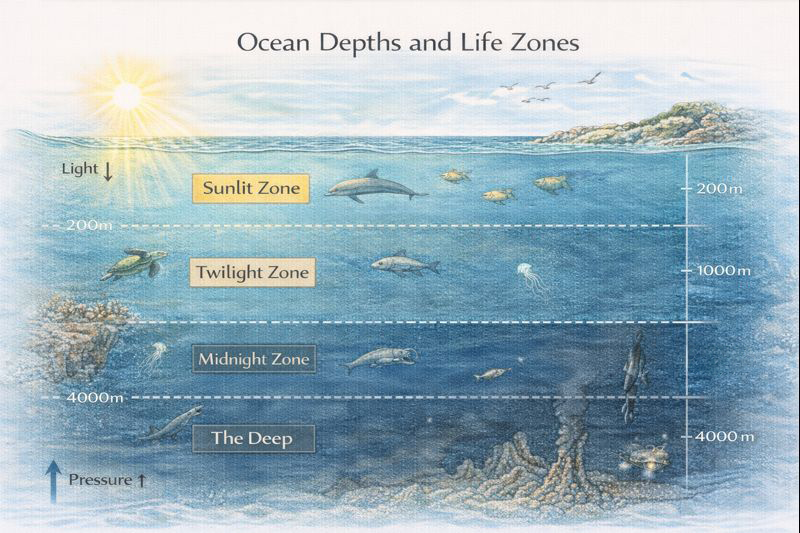
Cross-section diagram showing ocean organization by depth: Sunlit Zone (0-200m) with light penetration, Twilight Zone (200-1000m) with dimming light, Midnight Zone (1000-4000m) in darkness, and The Deep (4000m+) with hydrothermal vents
Understanding Ocean Organization
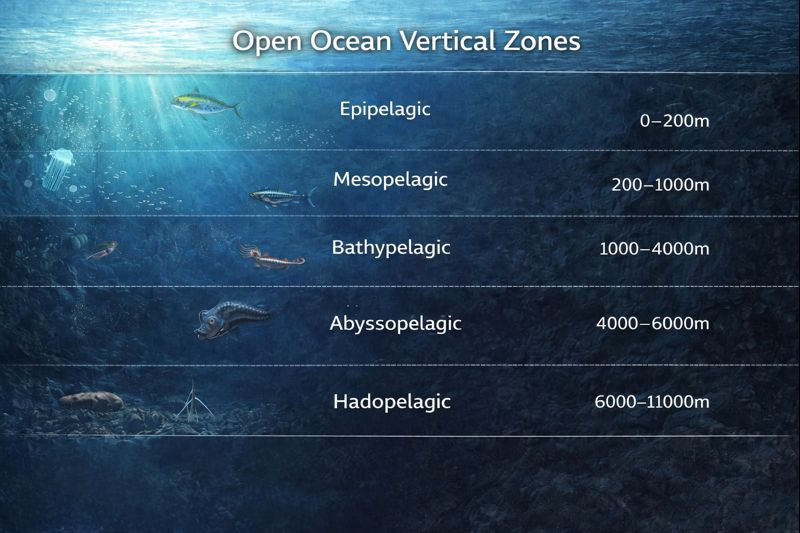
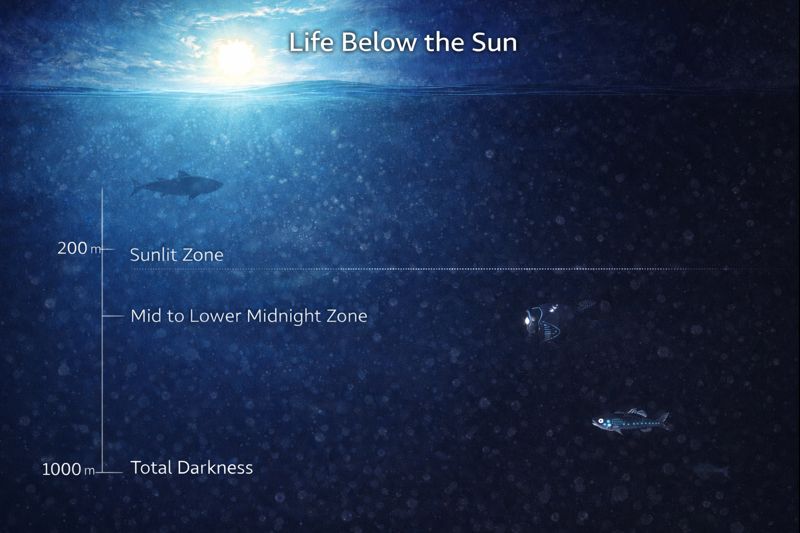
The ocean is organized vertically by depth, creating distinct life zones with fundamentally different conditions. Light, pressure, and temperature change with depth, shaping what can survive at each level. The three vertical zones (Sunlit, Twilight, Midnight) plus The Deep form the primary framework. Within and across these zones, specialized ecosystems emerge where unique conditions allow life to concentrate - coral reefs in tropical shallows, kelp forests on temperate coasts, the open ocean's blue desert, polar seas at high latitudes, and coastal margins where land meets sea.

Quick Navigation

Click any realm to jump directly to its detailed preview

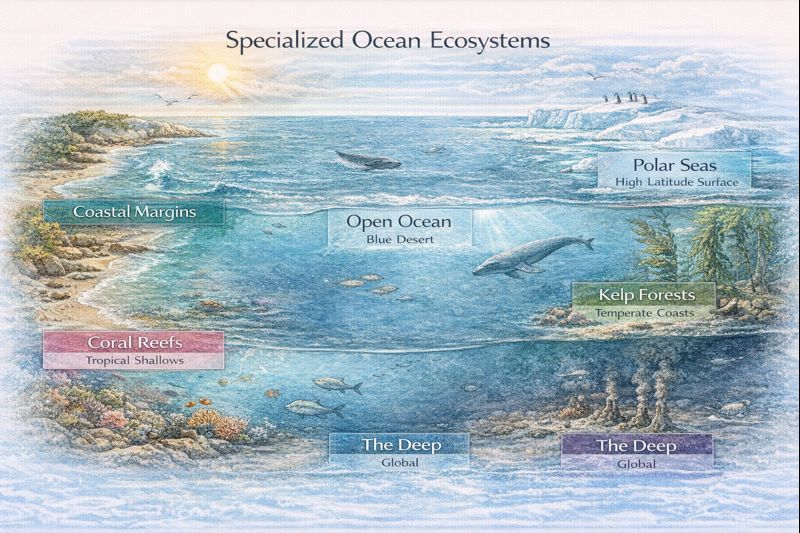
Geographic overview showing six specialized ocean ecosystems: Coastal Margins at shoreline, Coral Reefs in tropical shallows, Kelp Forests on temperate coasts, Open Ocean dominating the center, Polar Seas with ice at high latitudes, and The Deep with hydrothermal vents on the seafloor
Where Specialized Ecosystems Form
Within the vertical zones, six specialized ecosystems emerge where unique conditions concentrate life. Coastal Margins mark where land meets sea. Coral Reefs flourish in shallow tropical waters where symbiosis enables extraordinary biodiversity. Kelp Forests tower along temperate rocky coasts. The Open Ocean dominates as a vast blue desert where migrants and apex predators roam. Polar Seas exist at high latitudes where seasonal ice shapes life. The Deep encompasses the global seafloor, including hydrothermal vents and cold seeps where chemosynthesis supports unique communities independent of sunlight.

Explore Each Realm in Depth

Each realm guide provides comprehensive exploration of environmental conditions, dominant life forms, ecological relationships, adaptation strategies, and conservation challenges. These are substantial educational resources - averaging 2,500+ lines of content with interactive elements, scientific illustrations, and real-world examples.

Sunlit Zone
Realm 01 • The Vertical Ocean

The Sunlit Zone

0-200 meters • Epipelagic Zone

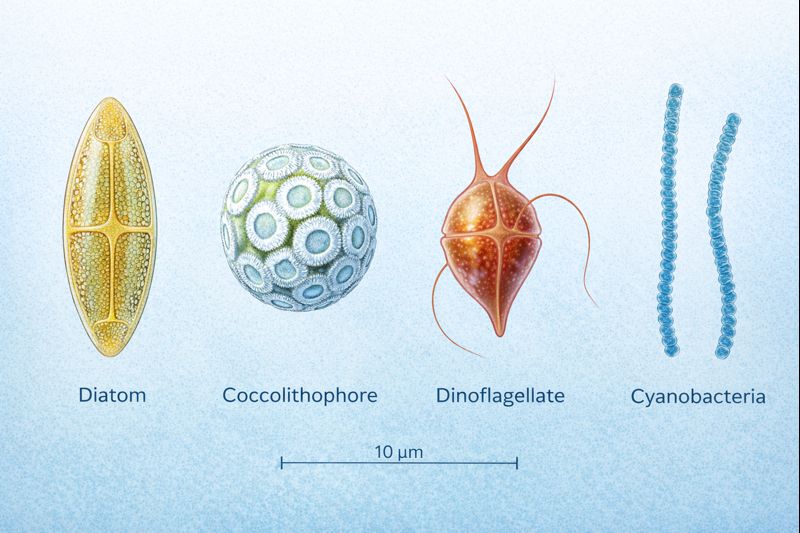
The sunlit zone is where ocean life begins. Here, light penetrates strongly enough for photosynthesis, fueling microscopic phytoplankton that produce 70% of Earth's oxygen and form the base of marine food webs. This realm hosts 90% of all marine species, from plankton blooms visible from space to dolphins, sea turtles, and vast schools of fish. Conditions vary dramatically by latitude and season, but all share one defining feature: abundant light that makes life extraordinarily productive.

Key Topics
Phytoplankton Biology Food Web Dynamics Pelagic Communities Primary Production
Explore Sunlit Zone
Twilight Zone
Realm 02 • The Vertical Ocean

The Twilight Zone

200-1,000 meters • Mesopelagic Zone

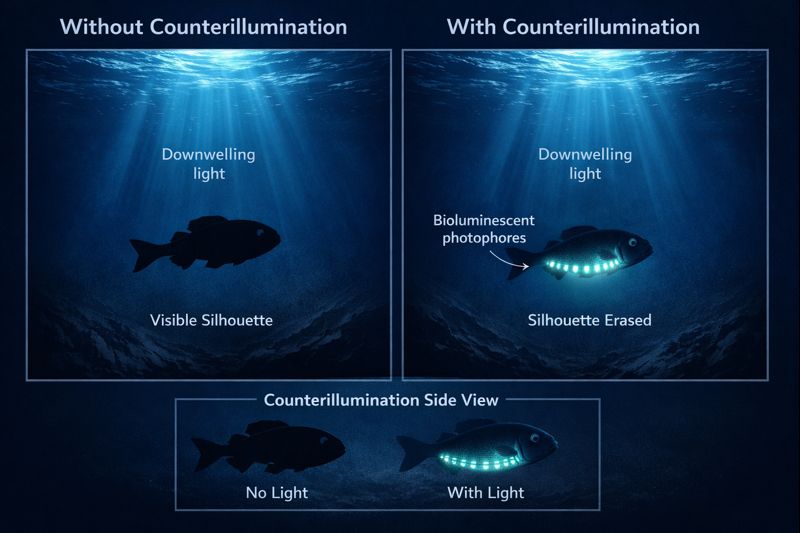
As light fades toward darkness, the twilight zone becomes an alien realm where bioluminescence replaces sunlight and the largest animal migration on Earth occurs daily. Each night, billions of organisms rise from these depths to feed in surface waters, then descend at dawn. This dim realm hosts more fish biomass than all the world's fisheries combined. Evolution has produced extraordinary adaptations: light-producing organs, enormous eyes, transparent bodies, and unique hunting strategies.

Key Topics
Bioluminescence Vertical Migration Carbon Pump Dim Light Adaptations
Explore Twilight Zone
Midnight Zone
Realm 03 • The Vertical Ocean

The Midnight Zone

1,000+ meters • Bathypelagic Zone

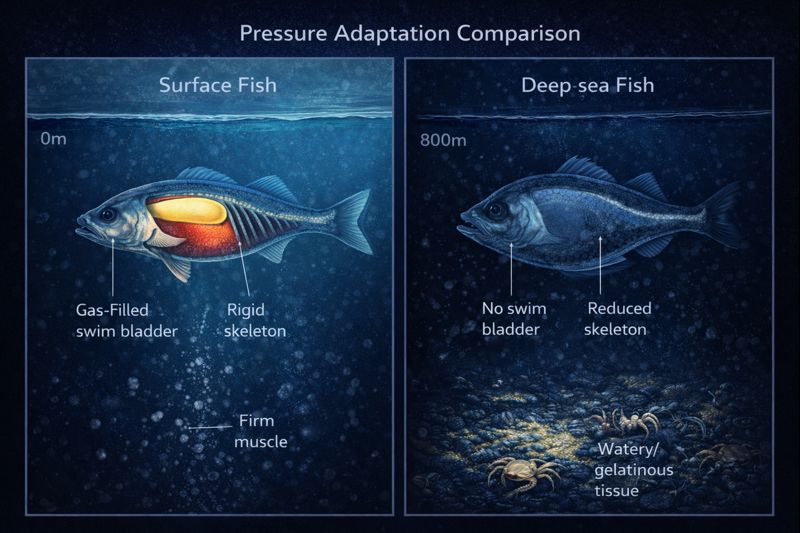
In eternal darkness where pressure crushes and temperatures hover near freezing, life takes forms that challenge imagination. The midnight zone is Earth's largest habitat by volume. Food is scarce - only marine snow drifting from above provides sustenance. Organisms have evolved extreme adaptations: massive jaws, distensible stomachs, and elaborate light lures. This realm reveals life's extraordinary resilience in alien forms.

Key Topics
Pressure Adaptations Deep-Sea Predators Marine Snow Extreme Survival
Explore Midnight Zone
Coral Reefs
Realm 04 • Specialized Ecosystem

Coral Reefs

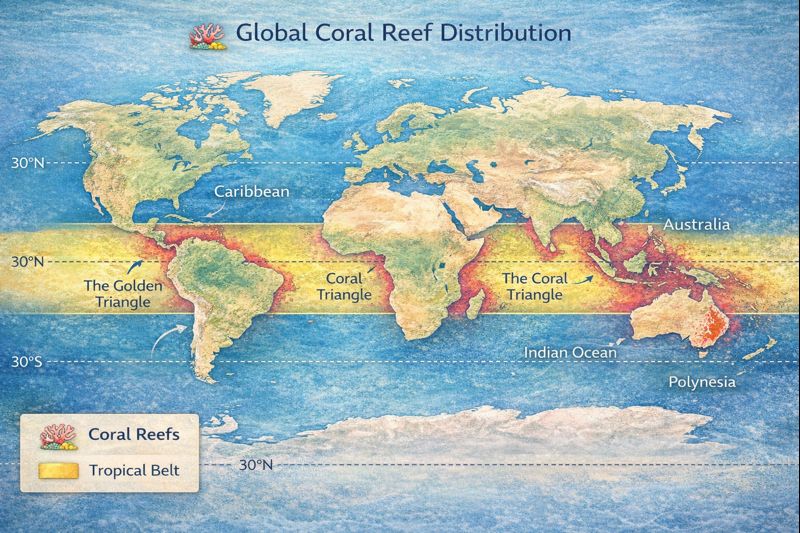
Tropical Shallows • 30°N to 30°S

Built by tiny animals in partnership with algae, coral reefs are underwater cities hosting 25% of all marine species despite covering less than 1% of the seafloor. These structures grow over millennia, creating labyrinths of shelter and hunting grounds. Reef biodiversity rivals rainforests. But reefs are fragile, thriving only in clear, warm, sunlit water. Rising temperatures and ocean acidification now threaten these ancient ecosystems.

Key Topics
Coral Biology Symbiosis Reef Biodiversity Coral Bleaching
Explore Coral Reefs
Kelp Forests
Realm 05 • Specialized Ecosystem

Kelp Forests

Temperate Rocky Coasts • Cold, Nutrient-Rich Waters

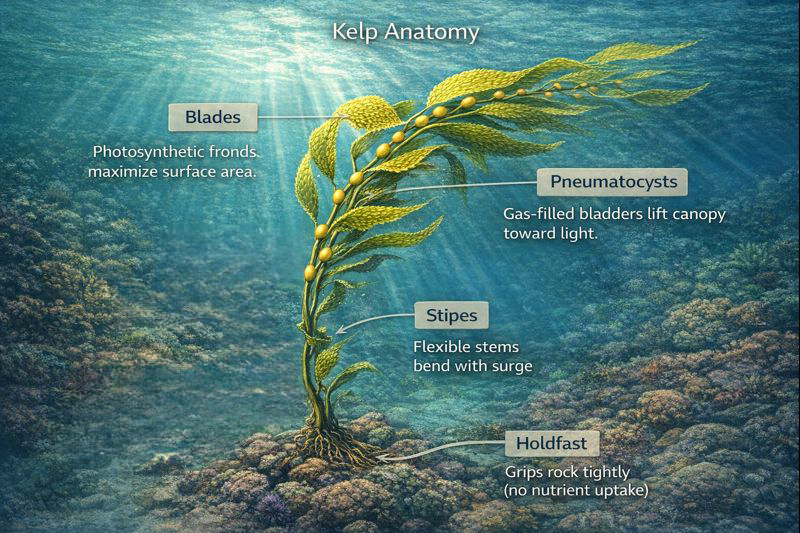
Giant kelp can grow two feet per day, creating towering underwater forests that shelter countless species. Sea otters are the keystone here - by eating sea urchins, they prevent overgrazing that would destroy the kelp. This is one of Earth's most productive ecosystems, converting sunlight and nutrients at extraordinary rates. Kelp forests buffer coastlines and provide nurseries for commercial fish, yet they're disappearing.

Key Topics
Giant Kelp Biology Trophic Cascades Sea Otter Keystone Forest Ecology
Explore Kelp Forests
Open Ocean
Realm 06 • Specialized Ecosystem

The Open Ocean

Pelagic Realm • The Blue Desert

Covering 45% of Earth's surface, the open ocean is a blue desert where nutrients are scarce yet life persists spectacularly. Here swim apex predators and longest migrants - bluefin tuna crossing oceans, great white sharks navigating continents, blue whales consuming millions of krill. This realm has no hiding places. Survival requires speed, endurance, and often massive schools. Industrial fishing now harvests these waters at unsustainable rates.

Key Topics
Pelagic Food Webs Apex Predators Epic Migrations Overfishing
Explore Open Ocean
The Deep
Realm 07 • Specialized Ecosystem

The Deep

Seafloor, Vents, Seeps • 4,000+ meters

The deep seafloor was unknown until the 1970s when hydrothermal vents were discovered. Here, in absolute darkness and crushing pressure, chemosynthetic bacteria replace photosynthesis as life's energy base. Vents spew superheated, mineral-rich water, supporting oases: giant tube worms, eyeless shrimp, ecosystems independent of the sun. When whales die and sink, their carcasses become islands of abundance for decades. This realm rewrites biology's rules.

Key Topics
Hydrothermal Vents Chemosynthesis Vent Communities Whale Falls
Explore The Deep
Polar Seas
Realm 08 • Specialized Ecosystem

Polar Seas

Arctic & Antarctic • High Latitude Waters

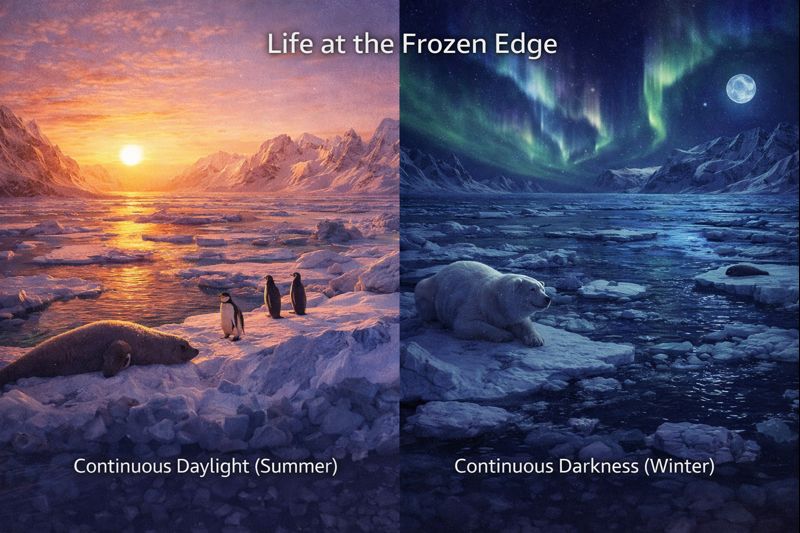
At Earth's poles, seasonal ice creates extreme yet productive realms. For months, darkness reigns. Then, explosive seasonal blooms fuel spectacular wildlife congregations - millions of seabirds, vast penguin colonies, migrating whales. Ice itself is habitat: algae grow beneath it, krill graze it, seals use it for resting. But polar seas are changing faster than any ocean realm. Sea ice is vanishing, transforming entire Arctic ecosystems within human lifetimes.

Key Topics
Ice Dynamics Polar Food Webs Marine Mammals Climate Change
Explore Polar Seas
Coastal Margins
Realm 09 • Specialized Ecosystem

Coastal Margins

Where Land Meets Sea • Intertidal to Nearshore

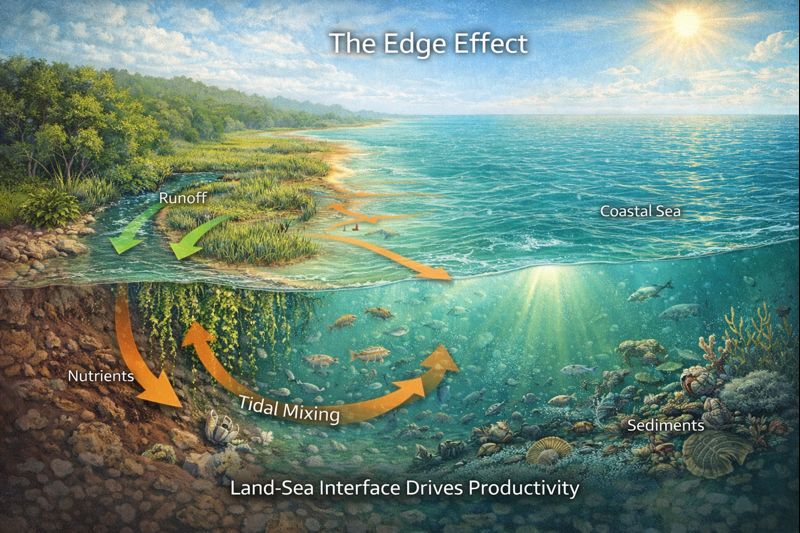
Where land meets sea, life endures constant flux. Twice daily, tides expose and submerge organisms, demanding extraordinary tolerance. Yet coastal margins are among Earth's most productive realms - estuaries where rivers meet ocean, salt marshes buffering storms, mangrove forests protecting coastlines, tide pools teeming with life. These are also the most human-impacted habitats, yet they remain crucial nurseries for commercial fish and our most accessible window into ocean life.

Key Topics
Intertidal Zones Estuaries Mangroves Human Impacts
Explore Coastal Margins